

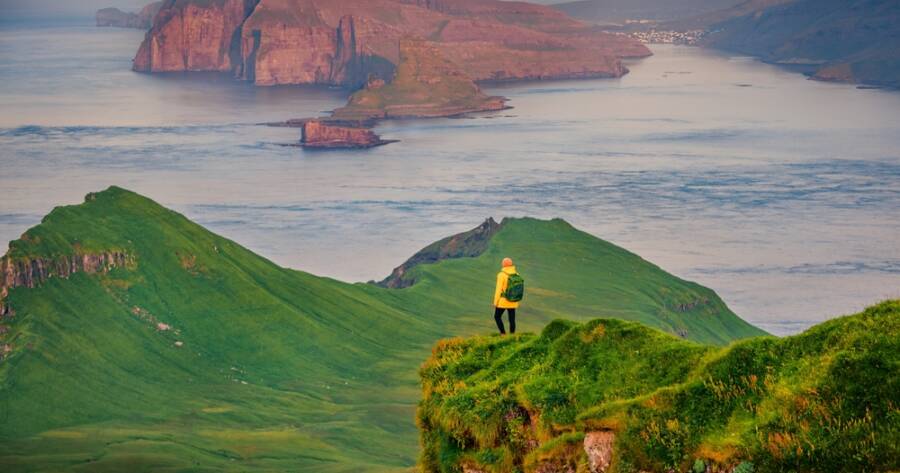
Constant notifications, crowded schedules, and endless scrolling can make it difficult to truly disconnect. Travel offers a rare opportunity to step away from that noise and settle into a slower, quieter rhythm. Some destinations make it easier than others, with limited connectivity, remote settings, and a natural pace that encourages presence. Choosing the right place can shift attention away from screens and back toward surroundings, creating space to recharge in a more meaningful way.
Faroe Islands, Denmark: Remote Beauty in the North Atlantic
The Faroe Islands feel isolated in the best possible way, with dramatic cliffs, misty landscapes, and small villages scattered across rugged terrain. The scenery invites long walks and quiet moments, far removed from the constant distractions of daily life. With fewer crowds and minimal urban development, the atmosphere naturally encourages a slower pace.
Connectivity exists but isn’t always the focus, especially outside main towns. Days are often spent exploring waterfalls, hiking coastal paths, or simply taking in the shifting weather. The simplicity of daily life makes it easier to disconnect, allowing attention to settle on the environment rather than digital interruptions.
Patagonia, Chile and Argentina: Vast Landscapes and True Escape
Patagonia offers an immense sense of space, where mountains, glaciers, and open plains stretch for miles without interruption. The scale alone creates a feeling of detachment from everyday concerns, replacing them with something quieter and more grounded. Time here is often shaped by nature rather than schedules.
Many areas have limited service, particularly within national parks and remote regions. Hiking, wildlife spotting, and long scenic drives become the focus, creating a rhythm that feels both immersive and restorative. The experience is less about constant activity and more about absorbing the surroundings at a natural pace.
Bhutan: A Culture Built Around Mindfulness
Bhutan stands apart for its intentional approach to tourism and its emphasis on well-being. The country prioritizes cultural preservation and environmental care, creating an atmosphere that feels calm and deliberate. Monasteries perched on cliffs and in quiet valleys contribute to a sense of reflection.
Internet access is available but not always central to the experience. Days often revolve around visiting temples, walking through villages, and engaging with local traditions. The pace is unhurried, making it easier to shift focus away from screens and toward meaningful, present moments.
Iceland’s Westfjords: Isolation Without the Crowds
While Iceland has grown in popularity, the Westfjords remain one of its most remote regions. Narrow roads, dramatic coastlines, and small communities create a sense of distance from busier parts of the country. The landscape feels untouched, offering a quiet alternative to more visited areas.
Service can be limited, especially when traveling between towns. This natural disconnect encourages a different kind of travel experience, where the focus is on exploration rather than connectivity. Long drives, hidden waterfalls, and empty viewpoints make it easy to feel fully immersed in the environment.
Mongolia: Open Space and Nomadic Simplicity
Mongolia offers one of the most complete escapes from modern life, with vast степpe landscapes and a nomadic way of living that remains largely unchanged. Staying in traditional gers provides a glimpse into a simpler routine shaped by nature and daily necessity.
Connectivity is minimal outside the capital, making it easy to step away from digital habits. Days are often spent riding horses, exploring open land, or simply observing the quiet rhythm of rural life. The absence of constant input allows for a deeper sense of presence and clarity.
Azores, Portugal: Island Life at a Slower Pace
The Azores, located in the Atlantic Ocean, offer lush landscapes, volcanic scenery, and a calm, unhurried atmosphere. While not completely disconnected, the islands encourage a slower way of experiencing travel. Small towns and natural surroundings create a setting that feels removed from busy urban life.
Activities tend to focus on nature, including hiking, whale watching, and exploring thermal springs. Even with access to modern conveniences, the overall pace makes it easier to step back from constant digital engagement. The balance of accessibility and tranquility creates an ideal environment for recharging.
When Disconnecting Becomes the Experience
Traveling to quieter, more remote places can change how time feels. Without constant notifications or pressure to stay connected, attention naturally shifts toward surroundings and simple moments. The experience becomes less about documenting and more about being present.
Choosing a destination that encourages disconnection doesn’t require giving up comfort entirely. Many places offer just enough infrastructure to feel at ease while still creating distance from everyday distractions. That balance allows for a deeper kind of rest, where the focus returns to what truly matters during time away.